Fertility Evaluation and Diagnosis
Before anything else, both partners go through detailed fertility testing. Blood work, semen analysis, and ultrasound scans help specialists understand exactly what’s happening so nothing is left to guesswork.
Stimulating the Ovaries
The woman begins hormonal injections to encourage her ovaries to produce multiple eggs rather than the usual one. This phase usually lasts around 10 to 12 days, with regular clinic visits to monitor how the follicles are responding.
Collecting the Eggs
When the eggs are ready, they are retrieved through a short, ultrasound-guided procedure performed under mild sedation. Most women go home the same day with minimal discomfort.
Preparing the Sperm
A semen sample is collected from the male partner and processed in the laboratory. Technicians carefully select the strongest and healthiest sperm for the procedure.
Intracytoplasmic Sperm Injection (ICSI)
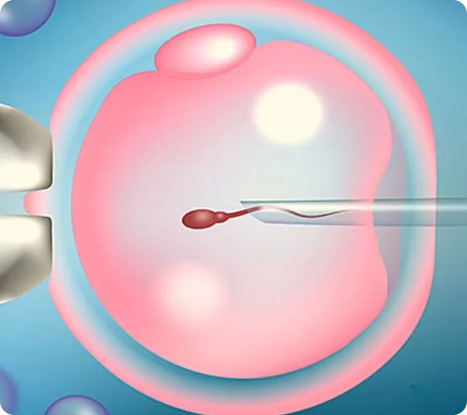
This is where ICSI truly stands apart. Under a high-powered microscope, an embryologist uses a hair-thin needle to inject a single sperm directly into each mature egg. The process is highly delicate, and the expertise of the embryologist plays a crucial role.
Embryo Development and Monitoring
Over the next few days, the fertilized eggs develop into embryos inside a carefully controlled incubator. The embryology team closely monitors their growth and selects the healthiest embryos for transfer.
The Transfer
A thin catheter is used to gently place the selected embryo into the uterus. No anesthesia is required, and most patients describe the procedure as no more uncomfortable than a routine gynaecological examination.
The Wait
Around 10 to 14 days later, a blood test is performed to check for the pregnancy hormone. For many couples, this waiting period is often considered the most emotionally challenging part of the process.